Active Recovery Massage
Active Recovery Massage
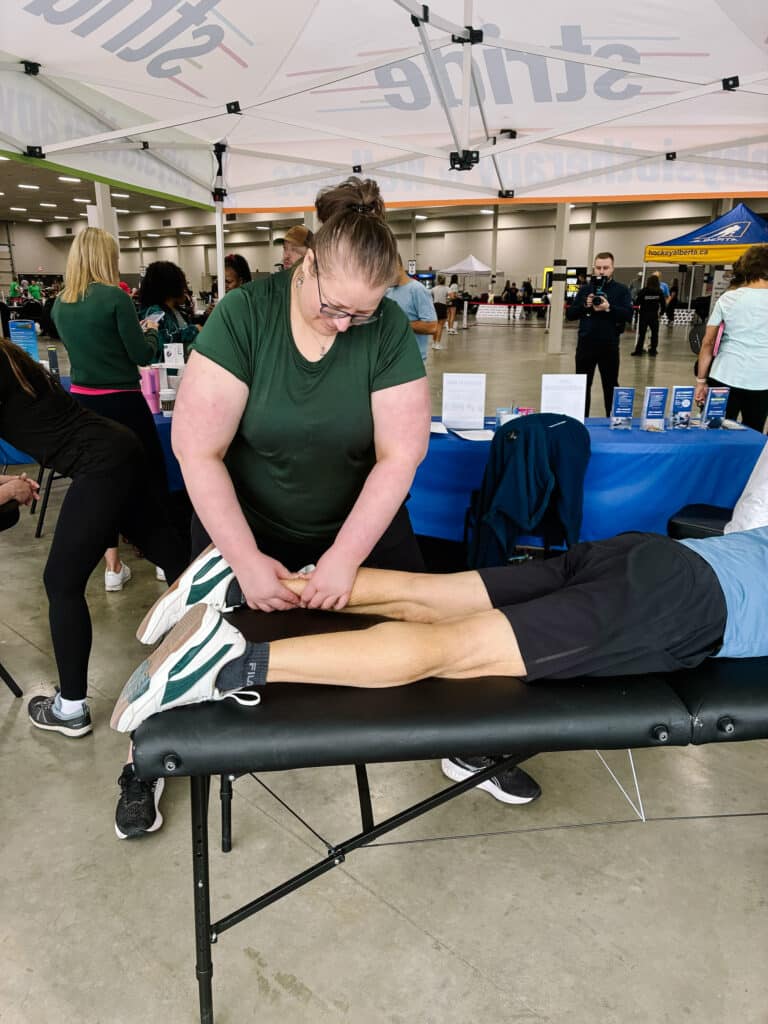
Active Recovery Massage is a movement-based massage therapy that combines hands-on treatment with guided movement to help reduce tension, improve mobility, and support recovery. While you stay on the treatment table, your Registered Massage Therapist (RMT) works through tight muscles while guiding your body through its natural range of motion.
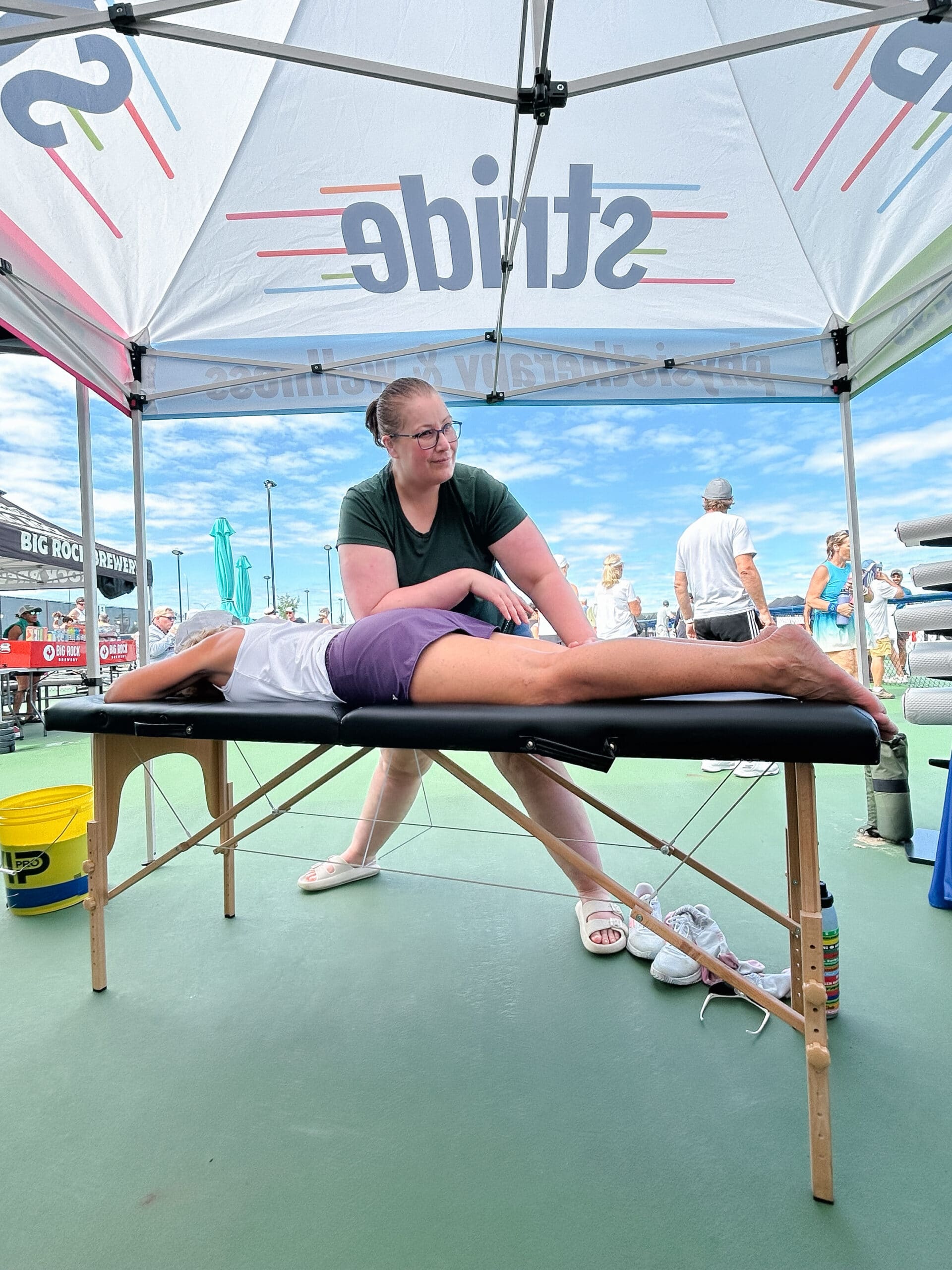
Unlike a traditional massage, Active Recovery Massage is performed without sheets while you wear comfortable clothing such as shorts and a tank top. This allows your therapist to work with your body as it moves, helping improve flexibility and restore natural movement.
Although it’s popular with athletes, Active Recovery Massage isn’t just for sports. It’s ideal for anyone feeling stiff, sore, restricted, or recovering from the physical demands of work, exercise, or everyday life.
How It Works
Your massage therapist may use a variety of evidence-informed techniques depending on your needs, including:
- Deep Tissue Work
- Myofascial Release
- Trigger Point Therapy
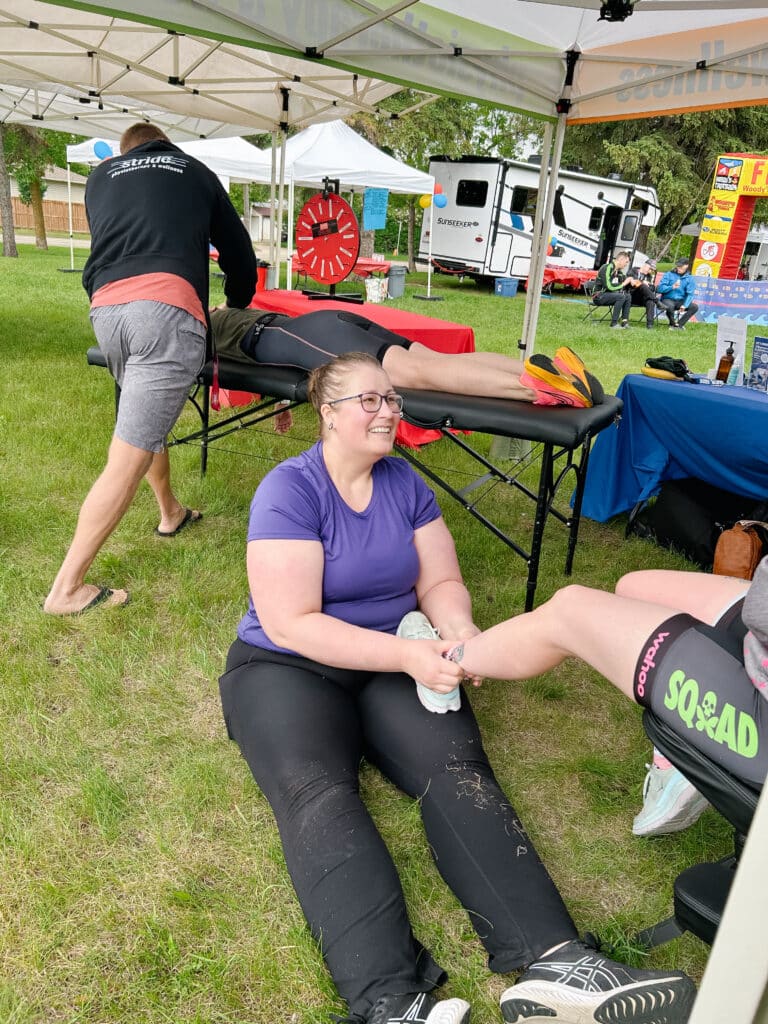
- Assisted Stretching
Every treatment is personalized. Rather than following the same routine every visit, your registered massage therapist adapts the treatment based on your movement, symptoms, activity level, and goals.
This combination of modalities are designed to address areas of tension, restriction, and overuse. Your registered massage therapist (RMT) will assess your movement patterns and areas of concern before applying firm, purposeful pressure to release tight muscles, improve circulation, and reduce inflammation.
Active release technique is particularly effective for breaking down scar tissue and restoring normal movement in overworked or injured soft tissues. Whether you’re preparing for an event, recovering from one, or working through a nagging injury, the approach is always adapted to where you are in your training cycle.
Active Recovery Massage Can Help With
Active recovery massage can be beneficial for a wide range of complaints, including:
Muscle Tension & Recovery
- Muscle tightness and stiffness
- Delayed onset muscle soreness (DOMS)
- Recovery after exercise, training, or sporting events
- Reduced flexibility or mobility
- Neck, shoulder, and back tension
- Hip flexor and hamstring tightness
- Postural aches related to sitting or repetitive work
Sport & Activity-Related Concerns
- IT band syndrome
- Shin splints
- Plantar fasciitis
- Achilles tendon irritation
- Tennis elbow
What to Expect
- Your first sport massage appointment begins with a brief intake conversation so your therapist can understand your activity level, any current complaints, and your goals for treatment.
- From there, you’ll receive a hands-on session focused on the areas that need the most attention. Wear or bring comfortable clothing, as your therapist may incorporate movement and stretching alongside massage techniques.
- Sessions are typically 45–60 minutes, and your therapist will leave you with self-care recommendations to support your progress between visits.
Note: Because movement is part of the treatment, you’ll remain dressed in comfortable clothing (shorts and a tank top are recommended) rather than being draped with sheets.
FAQ
What do I wear to my appointment?
- It is best to wear shorts and a tank top. Something you won’t be restricted in while moving.
Do I need to be active or athletic?
- Not at all. Active Recovery Massage is for anyone who feels stiff or restricted, or just wants to move more comfortably
Will I be working out?
- No. The movement is part of the treatment itself. Your therapist takes you through your natural range of motion while you’re on the table.
Why no sheets?
- Because you’re moving throughout, the session is done without sheets, so your therapist can follow your movement and work with you directly. You’ll wear a tank top and shorts.
Is it painful?
- It can feel intense at moments, that’s often part of how it helps, but never more than you can comfortably breathe through. Your therapist adjusts to keep it in a good range, and you’re in control the whole way.
How is it different from a regular massage?
- With a traditional massage, you relax during the session. Active Recovery works differently – you move during the session, and the relaxation comes afterward, because you’re left with more range of motion.
Is Active Recovery Massage covered by insurance?
- Yes. Active Recovery Massage is performed by a Registered Massage Therapist (RMT) and is billed as Massage Therapy. Coverage depends on your extended health benefits.
Who is Active Recovery Massage best for?
- Active Recovery Massage is ideal for athletes, active individuals, people recovering from exercise, and anyone experiencing stiffness, restricted movement, or muscle tension from work or everyday activities.