
If you’ve ever felt a sharp, burning pain shoot from your lower back down one leg, you know sciatica is hard to ignore. Many people start searching for how to relieve sciatic nerve pain once it interrupts their sleep and work. Understanding what causes sciatica, and why the pain travels the way it does, is a helpful first step toward relief.
What Causes Sciatica and Why Does the Pain Radiate?
Your sciatic nerve is the longest nerve in the body. It starts as several nerve roots that exit the lumbar spine (your lower back) and runs down the back of each leg to the foot. When something irritates or compresses one of those nerve roots, you can feel pain anywhere along the nerve’s path. That’s why the problem may start in your back, but you feel it in your calf or foot.
Common causes of this nerve compression include a herniated disc, where the soft centre of a spinal disc pushes outward; spinal stenosis, a narrowing of the spaces where nerves travel; and spondylolisthesis, when one vertebra slips forward over the one below it.[1] In some cases, a tight piriformis muscle deep in the buttock can irritate the sciatic nerve. This is known as piriformis syndrome.
What Are the Symptoms of Sciatica?
Sciatica pain symptoms usually affect one side of the body. Radiating pain from the low back or buttock down the leg is the classic sign, but it often comes with leg numbness, a tingling sensation like pins and needles, or muscle weakness that makes it harder to lift your foot or push off when you walk. Pain may flare when you cough, sneeze, or sit.
Because these symptoms overlap with other conditions, an accurate diagnosis of sciatica pain matters. Your practitioner will ask about your history and check your reflexes, strength, and sensation. Imaging isn’t always needed, but may be recommended if symptoms are severe or not improving.
How to Relieve Sciatic Nerve Pain
Many cases of sciatica improve over time with the right support. If you’re wondering how to treat sciatica at home, a few simple steps may help: stay gently active with short walks, change positions often, and try heat or ice if it feels soothing. Good back support for sciatica, such as a small cushion behind your lower back when you sit, can also help reduce strain.
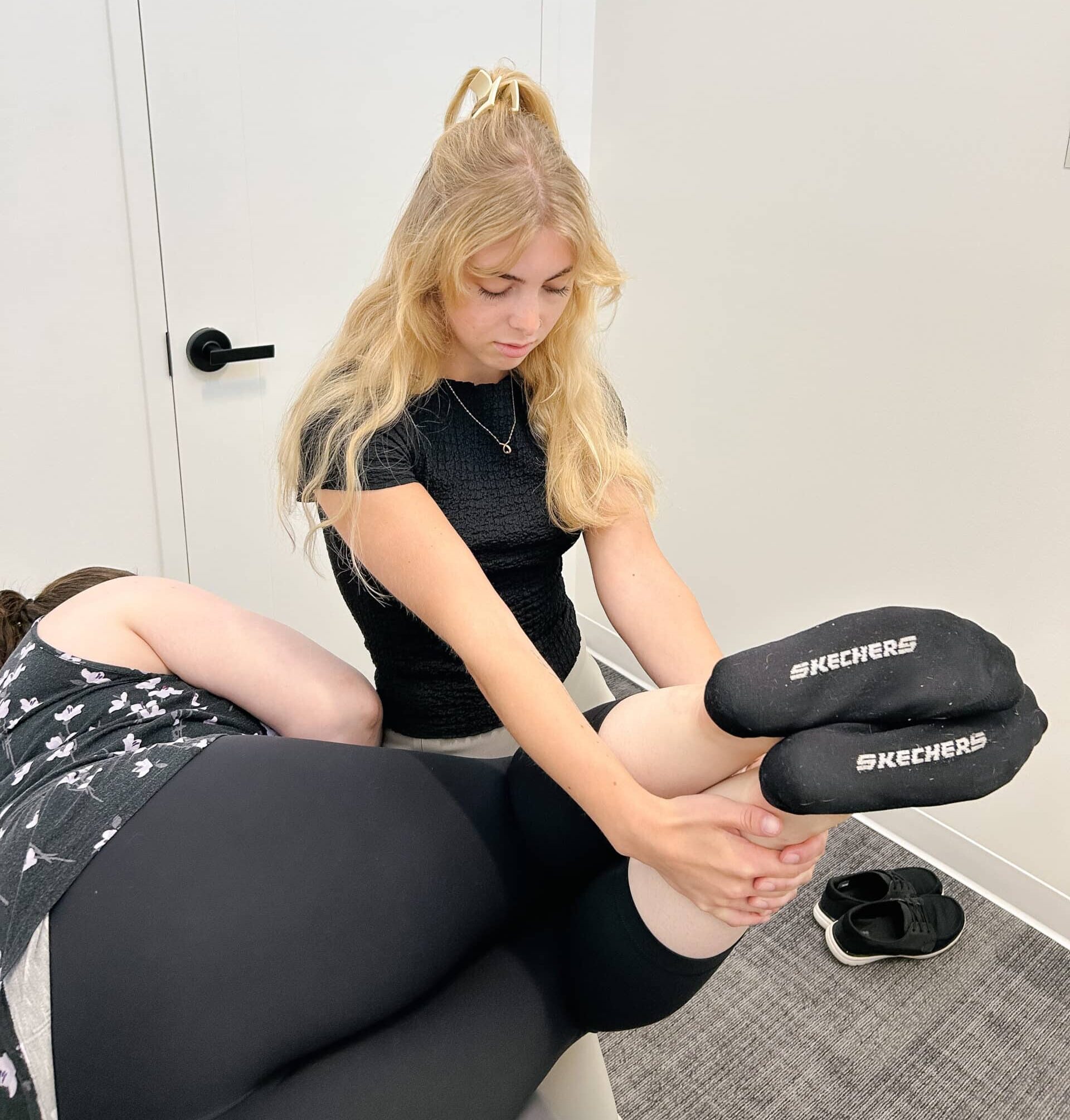
Professional care can help address what’s driving your symptoms. At Stride, our chiropractic team combines hands-on techniques, such as joint mobilization, adjustments, and soft tissue therapy, with targeted exercises to help reduce nerve irritation and get you moving more comfortably. For some patients, adding physiotherapy or massage therapy can support a smoother recovery.
Is chiropractic care effective for sciatica pain? Research suggests spinal manipulation may offer short-term relief for some people, and it tends to work best alongside exercise and education.
Frequently Asked Questions About Sciatica
Why does sciatica pain sometimes travel below the knee into the foot?
The sciatic nerve runs all the way down to your foot, so irritation at the nerve root can be felt anywhere along that path. Pain below the knee often points to a nerve root, rather than a sore muscle.
How can you tell if it’s sciatica or something else, like piriformis syndrome?
It can be hard to tell on your own, because both can cause buttock and leg pain. Piriformis syndrome often feels worse when you sit or put pressure on the buttock, while sciatica from the spine is more likely to come with back pain, numbness, or weakness. An assessment can help sort it out.
What sciatica symptoms mean you should go to the ER right away?
Go to the emergency department or call 911 if you have sciatica in both legs, numbness around your genitals or bottom, new trouble peeing or controlling your bladder or bowels, or leg weakness that is severe or getting worse.[1] These can signal a serious problem that needs urgent care.
What can a chiropractor actually do to help with sciatica pain?
A chiropractor will first check your back, hips, and nerves to find the likely source of your pain. Treatment may include gentle joint mobilization or adjustments, soft tissue therapy, and exercises you can do at home. You can learn more on our chiropractic services page.
Why does sciatica often worsen when sitting but improve while walking?
Sitting, especially when slouched, puts more pressure on the discs in your lower back and can squeeze an irritated nerve. Walking keeps your spine moving and often takes some of that pressure off. Short, frequent movement breaks can help.
Final Thoughts
Sciatica can be painful and frustrating, but understanding why the pain radiates makes it easier to choose your next step. With an accurate assessment and a plan built around your life, many people find meaningful relief.
Take the First Step Today
You don’t need a referral to get started. At Stride, your care begins with a conversation and continues with hands-on care. Have a question first? Reach out through our contact page.
Book your assessment with Stride today
References
[1] NHS. Sciatica. https://www.nhs.uk/conditions/sciatica/